 English
 Français
 Deutsch
 Português
 Español
 русский
  한국어
한국어 العربية
 Italiano
 Indonesia
 Schweiz
 Polski
 Nederlands
 ישראל - עברית
 Perzisch
 ไทย
ไทย 日本語
日本語 ኢትዮ-አማርኛ
 Việt Nam
 Kiswahili
 Srpski
 Ελληνικά
 简体中文
简体中文Main Types of Stadium Steel Truss Systems Explained
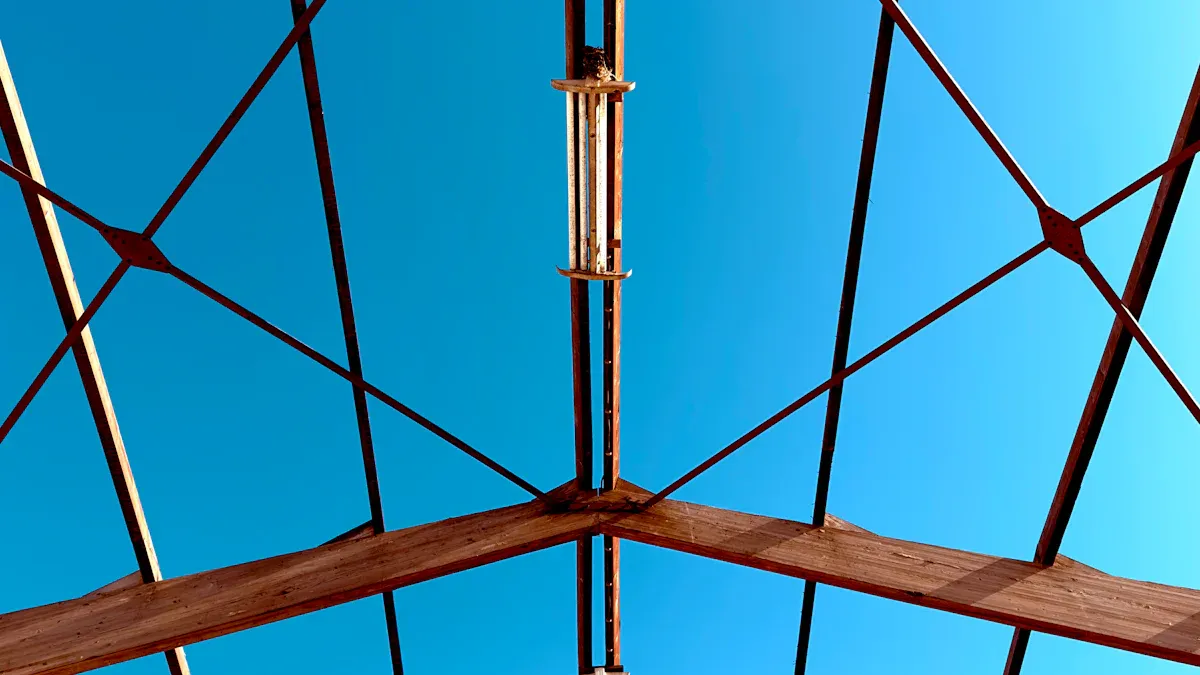
Stadium steel truss systems come in several main forms, each suited to specific engineering needs:
-
Straight trusses offer reliable support and suit most stadium roofs.
-
Curved and circular trusses create immersive spectator experiences and distribute weight efficiently.
-
Pre-rig trusses enable rapid assembly for venues hosting multiple events.
-
Box trusses handle heavy loads and support large equipment.
Selecting the right system impacts installation speed, material efficiency, and long-term maintenance. The following table highlights key benefits:
|
Benefit |
Impact on Costs |
|---|---|
|
Faster installation |
Reduces overall construction time and labor costs |
|
Lower material waste |
Minimizes expenses related to excess materials |
|
Reduced maintenance needs |
Lowers long-term operational costs due to durability |
Global trends show growing adoption of modular space truss systems for sustainability and design flexibility. Jinhuan Steel Structure delivers expert solutions for every Stadium Steel Truss Systems: Design scenario.
Key Takeaways
-
Choose the right truss system to improve installation speed and reduce costs.
-
Long-span trusses create open spaces, enhancing spectator experiences in stadiums.
-
Sustainable practices in truss design lower environmental impact and improve efficiency.
-
Early coordination among teams during design and installation prevents issues and ensures safety.
-
Consider the specific needs of your stadium to select the best truss type for durability and performance.
Stadium Steel Truss Systems: Design Approaches
Span & Load Characteristics
Stadium Steel Truss Systems: Design begins with understanding span and load requirements. Engineers select truss types based on the distance they must cover and the loads they must support. For example, space frame trusses and triangular trusses work well for large spans, sometimes exceeding 200 meters. These systems use triangular configurations to distribute weight efficiently. This approach ensures the roof remains stable and safe, even under heavy wind or seismic loads.
|
Aspect |
Description |
|---|---|
|
Truss Type |
Space frame or triangular trusses for long spans and high load capacity. |
|
Span Length |
Large-span roofs can exceed 200 meters. |
|
Load Capacity |
Designs account for joint strength, deflection, and wind resistance. |
|
Mechanical Performance |
Even load distribution and structural integrity for safety. |
Typical Stadium Applications
Different Stadium Steel Truss Systems: Design strategies suit various stadium needs. Long-span structures allow for massive, uninterrupted spaces, ideal for arenas and multi-purpose venues. Fast construction methods, such as prefabricated components, reduce project timelines by up to 40%. Durability remains essential, as stadiums must withstand extreme weather and heavy use. Sustainability also plays a role, with modern designs focusing on recyclability and reduced environmental impact.
|
Design Approach |
Key Benefits |
Structural Needs Addressed |
|---|---|---|
|
Long-span Structures |
Stability and durability |
|
|
Fast Construction |
Up to 40% faster assembly |
Efficient project delivery |
|
Durability |
Withstands weather and seismic events |
High strength-to-weight ratio |
|
Sustainability |
100% recyclable, green standards |
Long service life, less waste |
Fabrication & Erection Considerations
Fabrication and erection influence the success of Stadium Steel Truss Systems: Design. Engineers often split production across multiple plants to speed up schedules and manage logistics. Advanced modeling tools help teams coordinate, identify potential conflicts early, and improve safety. Exposed steel elements can enhance a stadium’s appearance. Sustainable practices, such as recycling and energy efficiency, further support project goals.
-
Prefabrication reduces on-site work and shortens timelines.
-
Multiple fabrication sites improve delivery and flexibility.
-
Advanced modeling detects design issues before construction.
-
Sustainable methods lower energy use and waste.
Jinhuan Steel Structure brings expertise in custom truss design, using the latest modeling techniques and sustainable practices to deliver reliable, efficient stadium solutions.
Long-span Space Truss Systems
Span & Load Characteristics
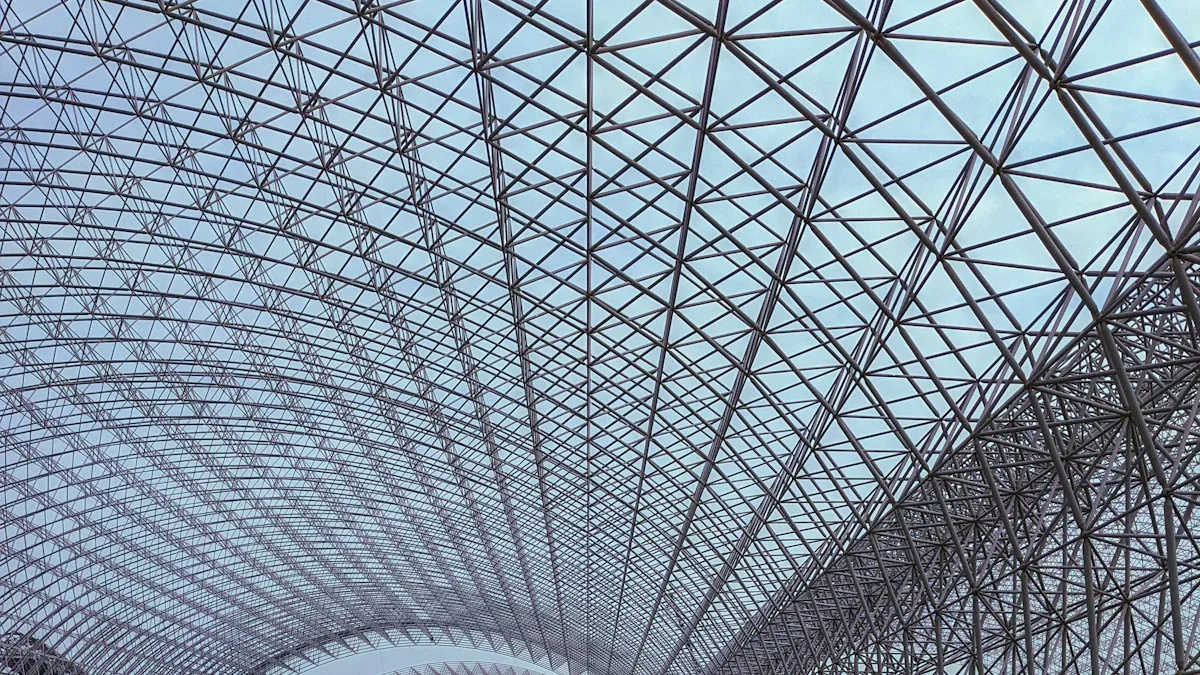
Long-span space truss systems play a vital role in large-capacity stadiums. These structures use a three-dimensional grid of interconnected rods and nodes. This design allows engineers to cover spans greater than 60 meters without interior columns. The main trusses must withstand combined loads of 5 to 7 kN/m². These loads include the weight of the roof, wind, and snow. Cone elements in the truss convert vertical loads into axial forces. This reduces bending moments in the members and increases efficiency. For example, an inverted triangular cone system can reduce steel consumption by up to 25%.
|
Structure Type |
Span Range |
Load Capacity (kN/m²) |
|---|---|---|
|
Main trusses of stadiums |
≥ 60m |
5-7 |
|
Roofs of airport terminals |
≥ 60m |
5-7 |
Applications in Large Stadium Roofs
Stadium Steel Truss Systems: Design often uses long-span space trusses for roofs in arenas and sports complexes. These systems create open spaces with no interior supports. The three-dimensional grid distributes forces in multiple directions. This enhances stability and safety. Lightweight steel materials make it possible to build large roofs that cover thousands of seats. The elimination of intermediate columns improves sightlines and creates a better experience for spectators.
-
Long-span space trusses allow for flexible roof shapes.
-
The system supports heavy lighting, sound, and video equipment.
-
Architects can design unique and iconic stadium profiles.
Fabrication & Erection Challenges
Engineers face several challenges during the fabrication and erection of long-span space truss systems. Weld shrinkage can pull chords off-line and twist nodes. Multi-element nodes may restrict welder access. Tolerance stack-up can misalign holes, causing delays. Unknown support levels and tight splice tolerances may lead to forced fits. Optimized thin sections can dent or buckle during handling. To address these issues, teams use advanced welding sequences, mock-ups, and inspection windows. They also match-drill and shop-ream splice plies, survey bearings before shipping, and use temporary stiffeners. Standardizing details and focusing on quality control help prevent rework and ensure project success.
Tip: Early coordination between design, fabrication, and erection teams reduces risks and improves efficiency.
Cantilever Truss Systems for Unobstructed Views
Span & Load Characteristics
Cantilever truss systems stand out in stadium engineering for their ability to create large, open spaces without the need for interior columns. Engineers design these systems to span impressive distances, sometimes exceeding 200 meters, which allows for clear sightlines from every seat. For example, some football stadiums feature cantilever trusses with a plane length of nearly 180 meters and maximum cantilever spans reaching 35 meters. The main truss can measure 25 meters, while secondary trusses extend up to 96 meters. These trusses often use a triangular three-dimensional form, with widths around 2 meters and mid-span thicknesses close to 3 meters. Truss spacing varies between 6.5 and 10.4 meters, and elevation can range from 12.5 to 24.2 meters. This structural approach supports heavy loads while maintaining a slender, elegant profile.
Use in Spectator Stands
Stadium designers often choose cantilever truss systems for spectator stands to maximize the viewing experience. By eliminating the need for dense columns, these systems provide unobstructed views for all attendees. The Phoenix Mountain Sports Park football stadium demonstrates this advantage with a cable-stayed dome structure spanning 200 meters and a maximum cantilever of 64 meters. This design accommodates 60,000 spectators, ensuring everyone enjoys a clear line of sight to the field. Cantilever trusses also allow architects to create dramatic overhangs and unique roof shapes, enhancing both function and aesthetics.
Installation Considerations
Installing cantilever truss systems presents unique challenges due to their size and complexity. The following table highlights key considerations:
|
Consideration Type |
Description |
|---|---|
|
Hoisting Challenges |
Large spans and low stiffness make hoisting difficult. Engineers must check stability and reaction forces throughout the process. |
|
Welding Quality Requirements |
High-quality, full penetration welds are essential. The number of welds and angles increases the complexity of on-site welding. |
|
Positioning and Measurement Accuracy |
Accurate placement is critical. The slender dimensions and long spans introduce uncertainties that affect installation precision. |
|
Installation Coordination |
Differences in unit lengths, elevations, and models require careful coordination and a tailored installation approach. |
Note: Careful planning and coordination during installation help ensure the structural integrity and safety of cantilever truss systems in stadium projects.
Arch Truss Systems for Landmark Stadiums

Span & Load Characteristics
Arch truss systems stand out in stadium engineering for their ability to create vast, open spaces. These structures use a curved form that efficiently transfers loads to the supports at each end. Engineers often select arch trusses for landmark stadiums because they can span over 100 meters without internal columns. This design results in large, column-free areas that enhance the spectator experience. The three-dimensional geometry of space trusses within the arch allows for efficient load distribution in multiple directions. This approach increases the strength-to-weight ratio by 30–50% compared to traditional systems.
|
Characteristic |
Description |
|---|---|
|
Span Capability |
Space truss structures can span over 100 meters without internal supports, creating large column-free spaces. |
|
Load Distribution |
The three-dimensional geometry of space trusses allows for efficient load distribution in multiple directions. |
|
Strength-to-Weight Ratio |
Space truss systems typically have a 30-50% greater strength-to-weight ratio compared to traditional systems. |
Iconic Stadium Applications
Many of the world’s most recognizable stadiums use arch truss systems. These structures support sweeping roofs and dramatic facades, making them ideal for venues that aim to become city landmarks. The arch truss enables architects to design bold, curved rooflines that define a stadium’s silhouette. Large sports arenas, Olympic venues, and national stadiums often feature this system. The absence of interior columns ensures clear sightlines for every spectator. The flexibility of the arch truss also allows for integration with cable-supported roofs and lightweight materials, supporting both function and aesthetics.
-
Arch trusses create signature roof profiles.
-
They support heavy lighting, sound, and video equipment.
-
The system adapts to both retractable and fixed roof designs.
Erection & Engineering Notes
Constructing arch truss systems presents unique engineering challenges. Roof execution requires minimal tolerance to meet analytical and design needs. The erection of the steel compression ring involves careful pulling and locking of cables at different stages. Laying fabric over the structure demands close collaboration with stakeholders and strict adherence to requirements. Lifting large elements, such as the ‘Y’ column, adds complexity due to their weight and shape. Seismic considerations play a role, as engineers often choose lightweight structures with cable tensile roofs to reduce seismic forces. A flexible compression system can ease the erection process and help control costs.
|
Challenge Description |
Details |
|---|---|
|
Roof Execution |
The roof made of steel required minimal tolerance for analytical and design needs. |
|
Erection of Steel Compression Ring |
Involved pulling and locking of cables during various stages. |
|
Laying of Fabric |
Required collaboration with stakeholders and adherence to specific requirements. |
|
Lifting of 'Y' Column |
A complex and heavy precast element that posed significant challenges. |
|
Seismic Considerations |
Lightweight structure with a cable tensile roof was chosen to mitigate seismic forces. |
|
Flexible Compression System |
Suggested to ease the erection process and reduce costs. |
Note: Early planning and precise coordination among engineering teams help ensure the successful erection of arch truss systems in landmark stadium projects.
Straight and Portal Frame Truss Systems
Span & Load Characteristics
Straight and portal frame truss systems provide reliable support for stadium structures. Engineers select these systems for their ability to span moderate to large distances while maintaining high load capacity. Straight trusses often form the backbone of simple roof designs, while portal frames offer flexibility for wider spaces. The following table summarizes the span and load characteristics of common frame types:
|
Frame Type |
Span Characteristics |
Load Capacity Characteristics |
|---|---|---|
|
Single-Span Portal Frame |
Up to 80 m |
High load capacity |
|
Multi-Span Portal Frame |
Greater widths |
High load capacity |
|
Tied Portal Frame |
Economical for larger spans |
High load capacity |
|
Pitched Roof Portal Frame |
Up to 35 m |
High load capacity |
|
Mono-Pitched Portal Frame |
Up to 15 m |
Moderate load capacity |
Portal frames handle heavy loads and resist lateral forces, making them suitable for stadium environments that require durability and safety.
Common Stadium Uses
Stadium designers use straight and portal frame truss systems in several scenarios. These systems support grandstands, concourses, and entry canopies. Multi-span portal frames create wide, open areas for seating and circulation. Pitched roof portal frames often appear in covered walkways and auxiliary buildings. Mono-pitched frames suit smaller structures, such as ticket booths or service areas. Straight trusses provide efficient support for linear roof sections and perimeter beams.
-
Grandstands and seating areas
-
Stadium entryways and canopies
-
Covered walkways and concourses
-
Auxiliary buildings and service zones
Portal frames offer versatility for both main stadium structures and supporting facilities.
Fabrication & Assembly Factors
Fabrication and assembly play a critical role in the success of straight and portal frame truss systems. Prefabricated components allow for rapid on-site assembly, improving construction efficiency. Design decisions must align with fabrication processes to ensure cost-effective solutions and proper fit-up. Engineers address tolerance limits to maintain structural integrity during assembly. Buildability considerations in the design phase lead to smoother construction. Specialist fabrication techniques may be required for long-span trusses. Truss and column construction provides an economic solution for large stadium projects.
|
Factor |
Description |
|---|---|
|
Prefabrication |
Prefabricated components enable quick assembly and efficient construction. |
|
Design considerations |
Design choices linked to fabrication improve cost efficiency and fit-up. |
|
Tolerance limits |
Managing tolerance limits ensures proper assembly and structural integrity. |
|
Buildability |
Buildability in design leads to construction benefits. |
|
Specialist fabrication |
Long-span trusses may require specialized fabrication techniques. |
|
Economic solution |
Truss and column construction offers a cost-effective approach for stadium structures. |
Tip: Early collaboration between design and fabrication teams helps optimize buildability and project outcomes.
Stadium Steel Truss Systems: Design offers several structural options, each with unique advantages. The table below highlights key benefits and considerations:
|
Truss System Type |
Advantages |
Typical Use |
|---|---|---|
|
Space Truss Structure |
High stiffness, simple appearance |
Large stadium roofs |
|
Tension Beam Structure |
Lightweight, expressive architecture |
Iconic stadiums |
Selecting the right system improves longevity and user experience. Project planners should consult Jinhuan Steel Structure for tailored solutions. For next steps, review assembly methods and maintenance needs to ensure optimal performance.
FAQ
What is the main advantage of a space truss system in stadium roofs?
A space truss system provides high stiffness and covers large spans without interior columns. This design creates open spaces and supports heavy roof loads, making it ideal for large stadiums.
How do cantilever truss systems improve spectator experience?
Cantilever truss systems remove the need for interior supports. This feature ensures clear sightlines for all spectators and allows for dramatic roof overhangs in stadiums.
When should engineers choose an arch truss system?
Engineers select arch truss systems for landmark stadiums that require long, column-free spans. These systems support curved rooflines and iconic architectural designs.
What are key considerations during truss fabrication and erection?
Teams must ensure precise fabrication, accurate assembly, and strict quality control. Prefabrication and advanced modeling tools help reduce errors and improve construction efficiency.
Can portal frame truss systems support heavy loads?
Portal frame truss systems handle high loads and resist lateral forces. They suit grandstands, entryways, and auxiliary stadium structures that require durability and safety.
Contact Us
Building Global Landmarks
with China's Steel Excellence